



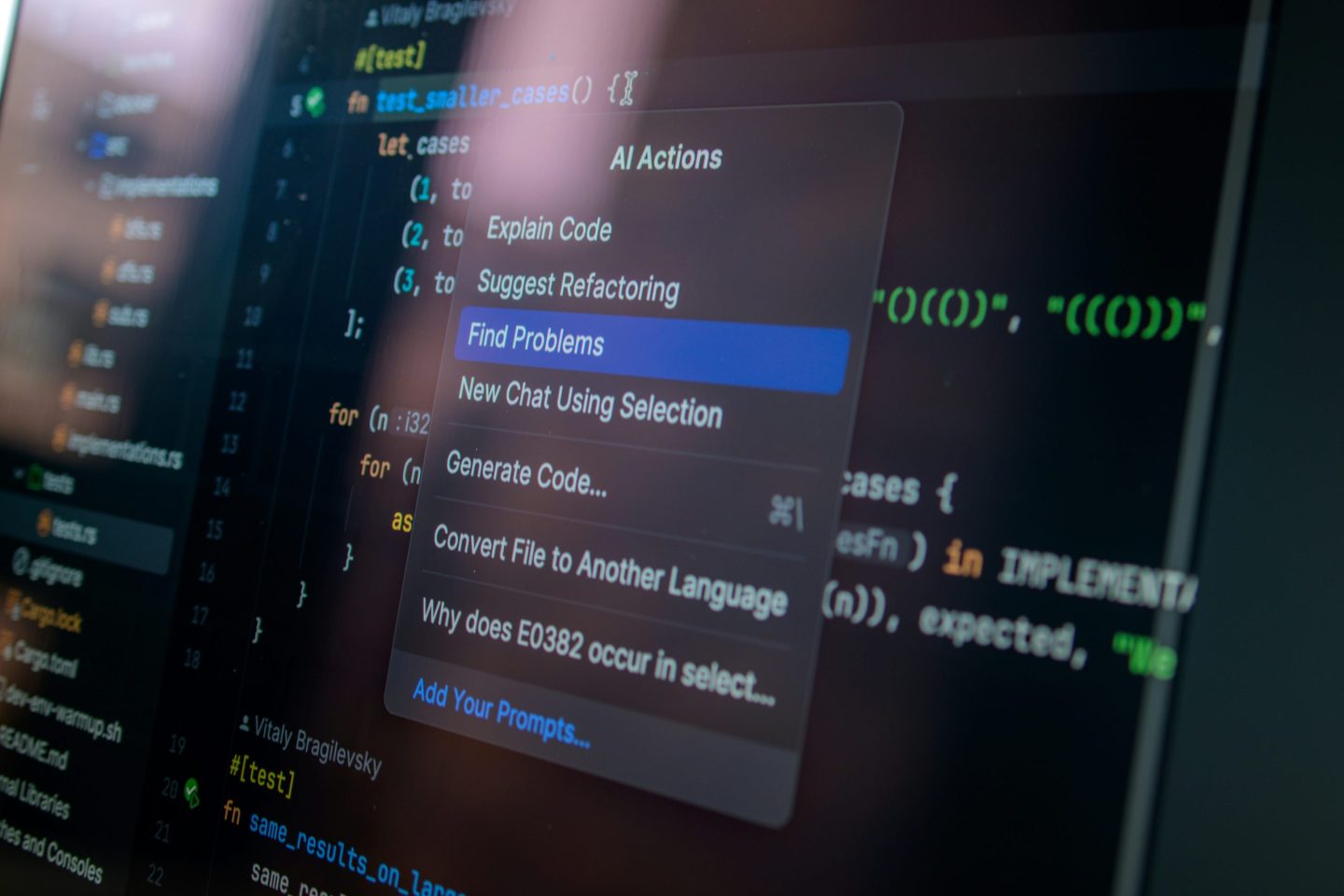
Software development is quietly undergoing a structural shift. For years, progress has largely been about better tools for humans: faster frameworks, smarter IDEs, improved CI/CD pipelines, and increasingly helpful AI assistants. But a newer paradigm is emerging that changes something more fundamental than tooling—it changes who (or what) actually does the work.
Agent-based systems are at the center of this shift. Instead of treating AI as a passive assistant that responds to prompts, these systems introduce autonomous or semi-autonomous software “agents” that can plan, execute, and iterate on tasks with minimal human intervention. In practice, this means moving from “AI helps developers” to “AI performs development tasks.”
This transition is still early, but its implications are already reshaping how software is designed, built, and maintained.
What Are Agent-Based Systems?
At a high level, an agent-based system is a setup where one or more AI agents can:
- Understand a goal
- Break it into smaller tasks
- Execute those tasks using tools (code editors, APIs, terminals, browsers, etc.)
- Evaluate results
- Iterate until the goal is achieved or refined
Unlike traditional AI assistants that respond to single prompts, agents operate in loops. They can maintain state, make decisions across steps, and adapt their approach based on feedback.
A simple way to think about it:
- A chatbot answers questions
- A coding assistant suggests code
- An agent can attempt to build and fix an entire feature
This shift from reactive to proactive behavior is what makes agent-based systems distinct.
Why Agent-Based Systems Are Emerging Now
Several technological changes have converged to make this possible:
1. More capable language models
Modern large language models can understand complex instructions, generate structured outputs, and follow multi-step reasoning chains. This is essential for planning and execution.
2. Tool integration
Agents are no longer limited to text generation. They can call APIs, run shell commands, query databases, and interact with external systems. This gives them real “agency.”
3. Improved orchestration frameworks
Systems like task planners, memory stores, and workflow controllers allow agents to persist context and coordinate multi-step actions reliably.
4. Growing software complexity
Modern systems are too large for any single developer to fully understand at once. Automation becomes more attractive simply because human bandwidth is limited.
How Agent-Based Development Actually Works
A typical agent-based workflow in software development might look like this:
- Task assignment
A developer or system defines a goal: “Implement user authentication with OAuth.” - Planning phase
The agent breaks the task into subtasks:- Set up authentication library
- Configure OAuth provider
- Create login endpoint
- Add session handling
- Write tests
- Execution phase
The agent writes code, modifies files, runs commands, and installs dependencies. - Validation loop
It runs tests or checks logs. If something fails, it attempts to debug and fix it. - Iteration
The agent repeats until success criteria are met or it reaches a limit.
This loop resembles how a human developer works—but with continuous automation between steps.
Types of Agents in Software Development
Not all agents are the same. Different types are emerging for different roles:
1. Coding agents
These focus on writing and modifying codebases. They can implement features, refactor modules, and fix bugs.
2. DevOps agents
They handle infrastructure tasks like deploying services, managing CI/CD pipelines, and monitoring systems.
3. Testing agents
These generate test cases, run regression suites, and analyze failures.
4. Debugging agents
They analyze logs, reproduce issues, and suggest fixes based on system behavior.
5. Research agents
They gather documentation, evaluate libraries, and compare technical approaches before implementation begins.
Together, these form an ecosystem of specialized workers rather than a single general assistant.
What Changes for Developers?
Agent-based systems don’t remove developers from the equation—but they do change their role.
Instead of writing every line of code, developers increasingly:
- Define goals and constraints
- Review and guide agent output
- Design system architecture
- Validate correctness and safety
- Handle edge cases and ambiguous requirements
In other words, developers shift from builders to directors.
This is similar to how industrial automation changed manufacturing. Machines didn’t eliminate engineers; they changed what engineers focused on.
Advantages of Agent-Based Systems
1. Speed at scale
Agents can work continuously, parallelize tasks, and execute repetitive work without fatigue.
2. Handling complexity
Large systems often involve tedious coordination between components. Agents can manage structured workflows more easily than humans in some cases.
3. Reduced cognitive overhead
Developers no longer need to track every detail of implementation simultaneously. Agents can manage subcomponents independently.
4. Faster prototyping
Entire features can be scaffolded quickly, allowing teams to test ideas earlier in the development cycle.
Limitations and Challenges
Despite their promise, agent-based systems are far from perfect.
1. Reliability issues
Agents can misunderstand requirements or take incorrect paths with confidence. Small errors in planning can cascade into larger failures.
2. Debugging difficulty
When an agent makes changes across multiple files, understanding why it made a decision can be difficult.
3. Context limitations
Even advanced systems struggle with very large codebases or long-running dependencies.
4. Security risks
Autonomous systems with tool access introduce new attack surfaces. Poorly constrained agents could modify critical systems incorrectly.
5. Over-automation risk
There is a danger of relying too heavily on agents without understanding underlying systems, leading to fragile architectures.
Human + Agent Collaboration Is the Real Model
The most effective use of agent-based systems today is not full autonomy, but collaboration.
A strong pattern emerging in practice looks like this:
- Humans define architecture and constraints
- Agents handle implementation details
- Humans review critical changes
- Agents iterate based on feedback
This creates a feedback loop where humans provide judgment and agents provide execution speed.
Rather than replacing developers, agents amplify their output.
How Agent Systems Will Evolve
The next stages of development likely include:
1. Better long-term memory
Agents will retain project history more effectively, reducing repeated mistakes.
2. Multi-agent collaboration
Instead of one agent doing everything, specialized agents will collaborate like teams.
3. Stronger verification layers
Automated testing, formal verification, and simulation environments will ensure correctness before deployment.
4. Deeper IDE integration
Agent workflows will become embedded directly into development environments rather than existing as separate tools.
The Bigger Shift: From Code to Intent
Perhaps the most important change is conceptual.
Traditional development is about writing code directly. Agent-based development moves toward specifying intent:
- “Build a login system”
- “Optimize this service for latency”
- “Migrate this API to a new version”
The system then determines how to execute those instructions.
This doesn’t eliminate programming—it abstracts parts of it into higher-level reasoning and orchestration.
Conclusion
Agent-based systems represent a shift in software development from manual execution to delegated execution. They bring automation beyond suggestion into action, enabling systems that can plan, build, and iterate on their own work.
However, they are not replacements for developers. They are force multipliers that depend heavily on human guidance, oversight, and architectural thinking.
The most realistic future is not one where agents write all software independently, but one where developers and agents operate as tightly coupled teams—each doing what they are best at.
And in that future, the key skill won’t be just writing code efficiently. It will be knowing how to design problems that agents can solve safely, correctly, and predictably.






Comments are closed